


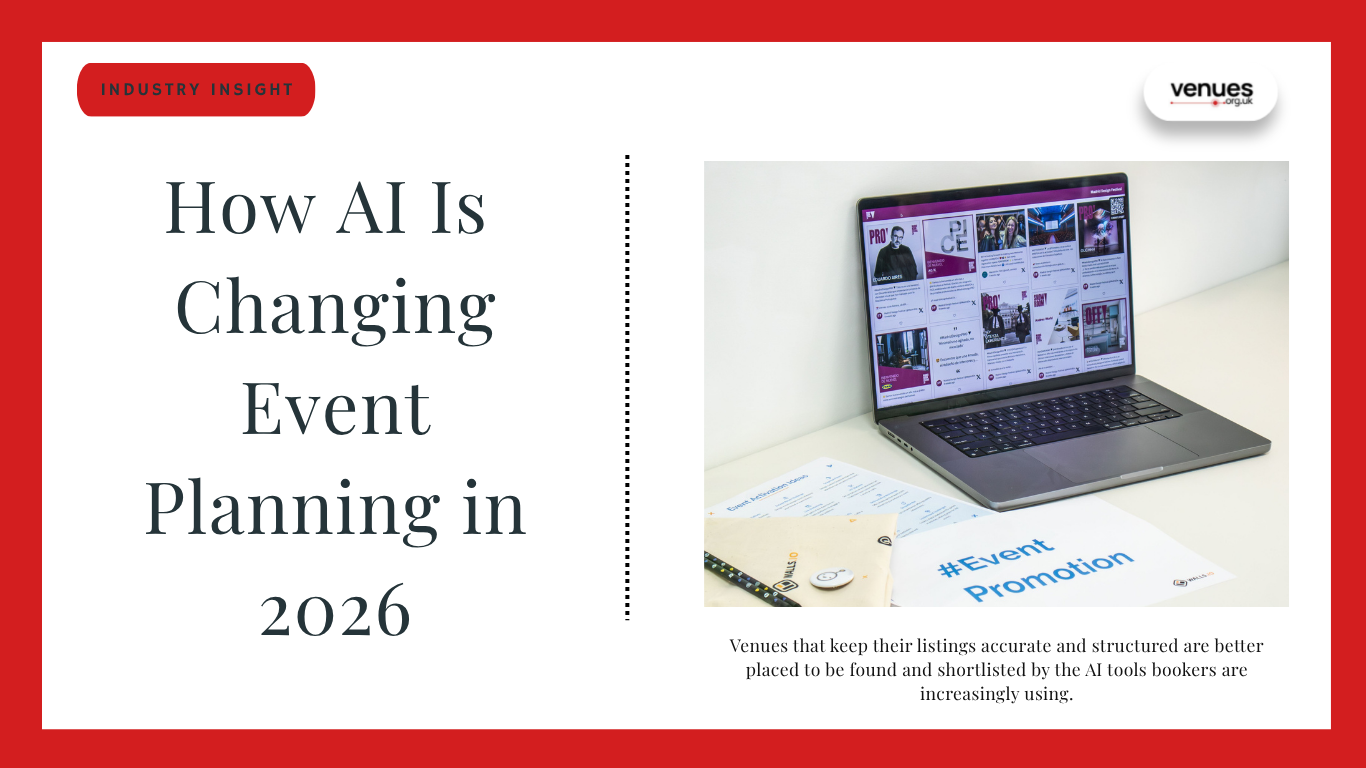
AI has moved from experimental add-on to standard part of the event planning toolkit. According to Cvent's 2026 Global Planner Sourcing Report, based on a survey of 1,650 event professionals, three-quarters of planners now use AI in their sourcing process, applying it to finding and selecting venues, analysing attendee data for the best fit, and comparing bids. Over 60% expect to increase their use of AI further this year.
The main use case remains venue sourcing and administration. Planners are using AI to speed up RFP creation, compare bids and manage vendor communication, tasks that previously consumed hours of manual work. Around 58% of planners still spend up to five hours using technology to source each event, which suggests AI has not yet eliminated the workload, but is reshaping how it is distributed.
Adoption is not universal across all functions. Attendee-facing AI, such as chatbots and on-site concierge tools, has been slower to catch on. Trust is the main barrier: a wrong answer given live, in front of an attendee, carries more risk than a delayed RFP response. Platforms that combine AI with a clear handoff to a human member of staff are seeing better uptake than fully automated systems.
On the venue side, AI is increasingly used behind the scenes for demand forecasting, space utilisation and pricing decisions, helping venues respond to enquiries faster and with more accurate availability.
For bookers, the practical takeaway is that AI works best as a research and shortlisting tool, not a decision-maker. It can narrow a long list of venues down to a manageable few based on capacity, location and budget, but site visits, contract negotiation and understanding a venue's actual character still require human judgement.